Saint-Paul
Saint-Paul-Saint-Louis church, rue Saint-Antoine
The Saint-Paul-Saint-Louis church at 99 rue Saint-Antoine — daily hours, free entry, Delacroix painting, Jesuit baroque history, a classical concert and hotels nearby. Checked October 2026.
A Jesuit church on rue Saint-Antoine
The church stands at 99 rue Saint-Antoine, in the 4th arrondissement. Its first name, Saint-Louis-des-Jésuites, records its builders. Built over fourteen years from 1627, it was designed by Étienne Martellange and François Derand in a baroque style, and was listed as a historic monument in 1887.
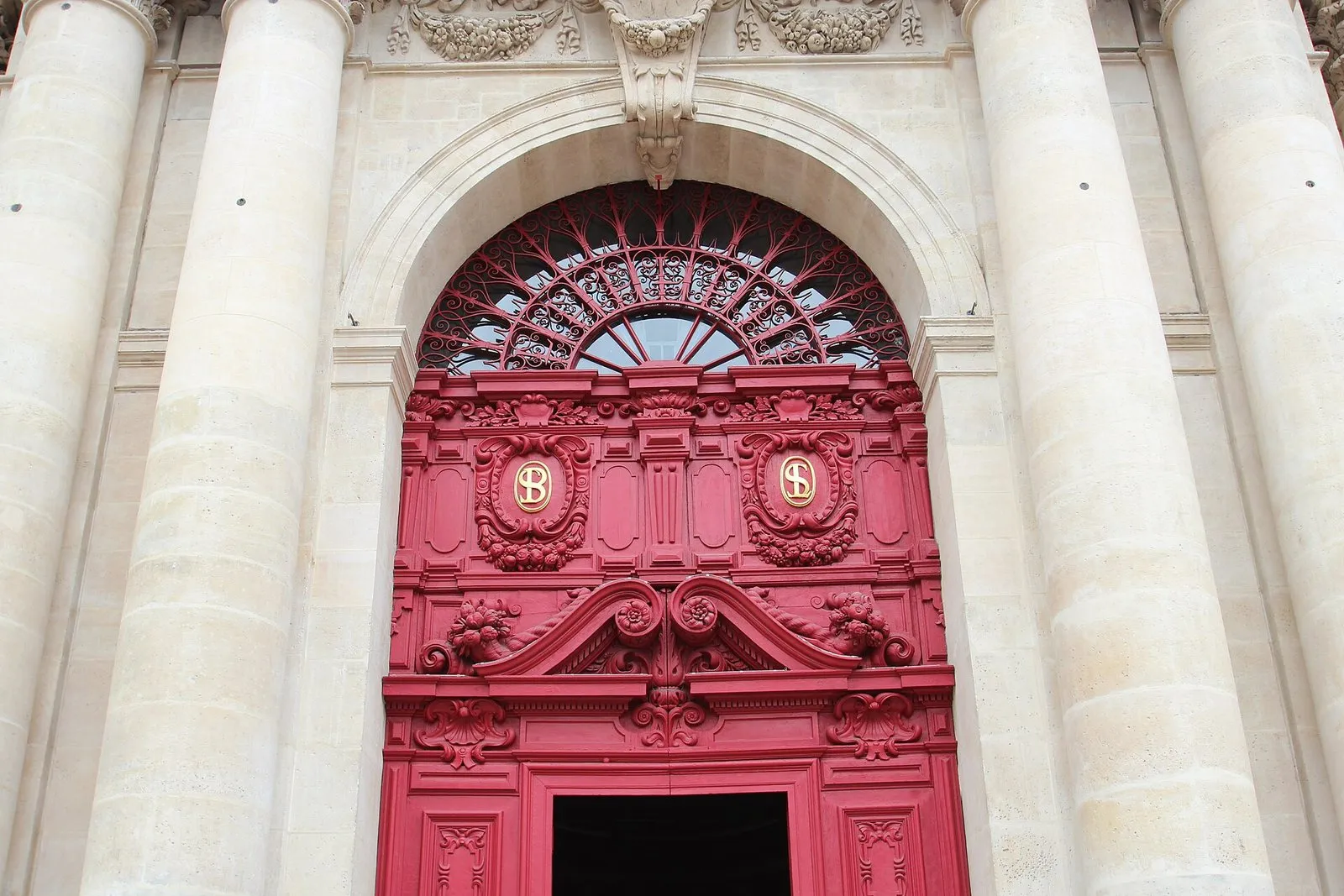
Photo: Lionel Allorge, CC BY-SA 3.0, via Wikimedia Commons

It is a working parish church, not a museum. That explains the opening rule: the doors are open from 8 a.m. to 8 p.m., but visitors are not admitted while services or prayer are under way, nor all Sunday morning.
What to look for
- Delacroix. Christ in the Garden of Olives, shown at the Salon of 1827.
- Germain Pilon. A Virgin of Sorrows from 1586, older than the church itself.
- Victor Hugo’s gift. Two shell-shaped stoups, given when his daughter Léopoldine married in 1843. His apartment on the place des Vosges is about 320 m away as the crow flies; see the Maison de Victor Hugo.
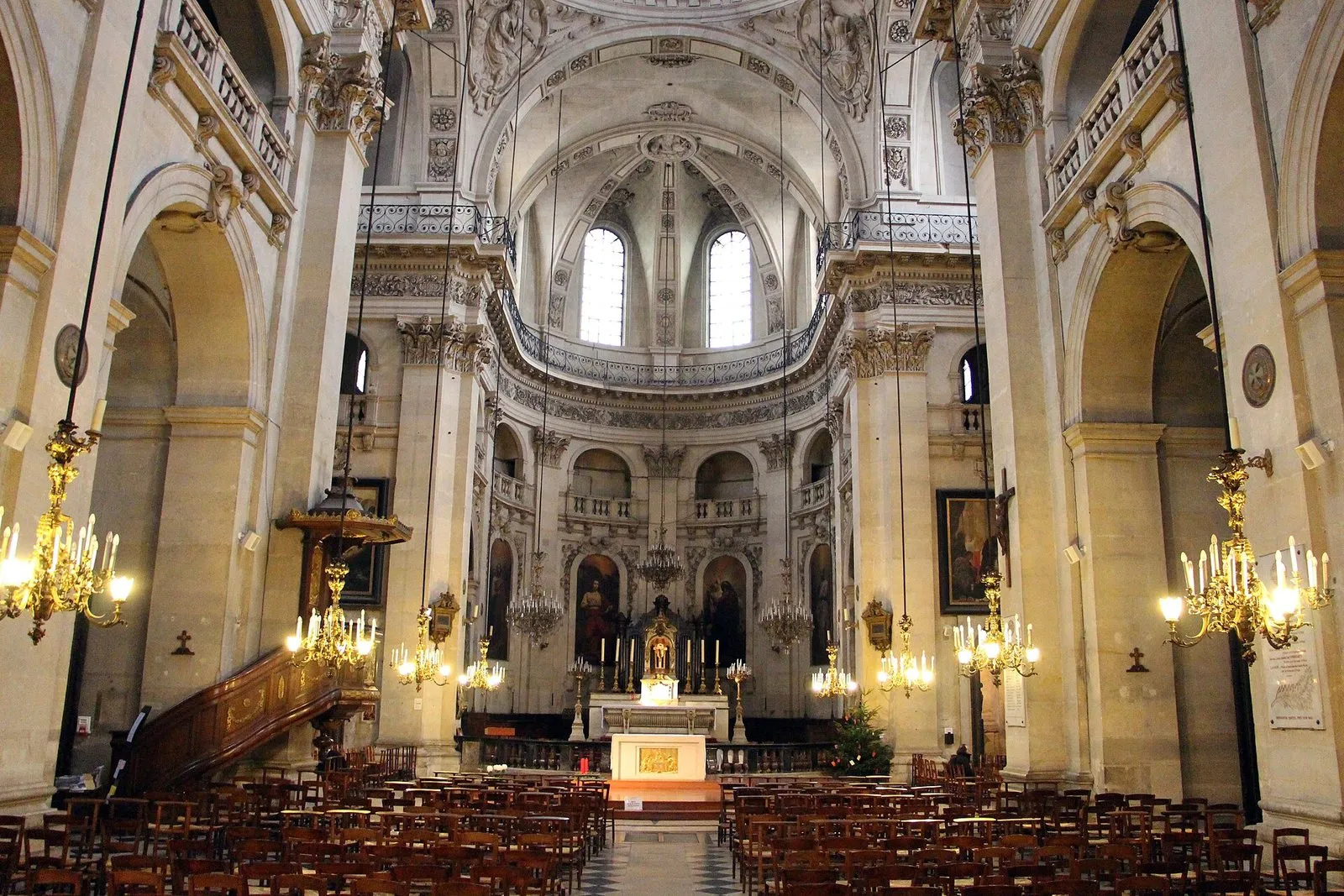
Photo: Sailko, CC BY 3.0, via Wikimedia Commons

A passage, the passage Saint-Paul, is reported to link the church to the rue Saint-Paul and the neighbouring lycée Charlemagne; the source is a reference encyclopaedia rather than the parish, so confirm it on the spot.
A Jesuit foundation, a royal first stone
Louis XIII laid the first stone in 1627, on ground freed by the demolished fortifications of Philippe Auguste, according to Wikipedia. Before the Revolution the church was known for its music and its preaching: Marc-Antoine Charpentier was master of music from 1688 to 1698, and Louis Bourdaloue preached there from 1669 to 1693. The Jesuits were expelled in 1762; during the Revolution the building hosted the Cult of Reason, and Catholic worship resumed in 1802.
Reading the façade and the plan
The façade rises in three levels at the centre and two at the sides, superimposing the Corinthian and composite orders. According to Wikipedia, it draws on Saint-Gervais-Saint-Protais of 1618 with Italian baroque touches. The plan combines the single nave of the Gesù in Rome, with side chapels, and the French Latin cross. The dome is unusually tall for a baroque church, a Gothic influence. The façade was restored between August 2011 and October 2012, and the baroque windows have been restored in stages since 2017, the last bays being the upper ones of the choir in 2024 and 2025.
The building and its dome
The dome rises to 55 metres, according to Wikipedia, and the first mass was celebrated by Cardinal Richelieu on 9 May 1641, Ascension Day. The church became a parish church in 1803, when it took the double name that combines the destroyed church of Saint-Paul-des-Champs with the former Jesuit chapel. It has been listed since 10 February 1887.
The organs
The great organ in the gallery is by Martin (1871), restored in 1972, 1999 and 2005, and has 40 stops. The choir organ, by Krischer, dates from the nineteenth century and has 13 stops, according to Wikipedia. Since the church is a place of worship, the practical way to hear them is at a service or a concert; the opening rules above apply.
People buried here
Wikipedia lists among the burials the Jesuit François d’Aix de La Chaise, the cardinal René de Birague and the Chouan leader Georges Cadoudal.
When services take place
The parish publishes its timetable, read on 5 October 2026. Mass is said on Monday at 6.45 p.m., from Tuesday to Friday at 7 p.m., with an additional mass at 12.15 p.m. from Thursday to Saturday, and on Sunday at 9.30 a.m., 11 a.m. and 7 p.m. Eucharistic adoration takes place from Tuesday to Friday between 6 and 7 p.m., Gregorian vespers on Monday at 6 p.m., and lauds from Tuesday to Friday at 8 a.m. Because visits are not possible during services, these are the times to avoid for sightseeing: the early evening on weekdays and the whole of Sunday morning.
The parish office, at 7 passage Saint-Paul, is open from 9 a.m. to 12 noon and from 2 p.m. to 5 p.m. on Monday, Tuesday, Thursday and Friday. The parish adds that free access to the church depends on donations to the Denier de l’Église, which is a request, not an entrance fee.
Choosing your moment
The church is open every day from 8 a.m. to 8 p.m. and entry is free. Visits, individual or in groups, are not possible during services, prayer times and all of Sunday morning, so a weekday or a Sunday afternoon is the sure option. According to paris.fr, the church is not accessible to people with reduced mobility.
Getting there
Saint-Paul (line 1) is about 78 metres from the church in a straight line. Sully-Morland and Pont Marie (line 7) are about 349 and 360 metres away, and Bastille (lines 1, 5 and 8) about 532 metres.
Combining the visit with a walk
The distances from the church are straight lines between coordinates in our data; the times multiply them by 1.3 and walk them at 80 metres a minute.
- Village Saint-Paul: 125 metres, about 3 minutes.
- Hôtel de Sully: 148 metres, about 3 minutes.
- Carnavalet Museum: 268 metres, about 5 minutes.
- Place des Vosges: 283 metres, about 5 minutes.
- Rue des Rosiers: 314 metres, about 6 minutes.
- Maison de Victor Hugo: 321 metres, about 6 minutes.
Details worth finding inside
- The high altar. The white marble altar was rebuilt under Louis-Philippe from fragments of Napoleon’s tomb at the Invalides, according to Wikipedia.
- The Death of Saint Louis. A painting by Jacques de Létin hangs in the church, with a Crucifixion from the Bastille chapel in the sacristy.
- A graffito. On the second pillar of the right-hand nave, a nearly effaced inscription reads “République française ou la mort”; it dates to the Commune.
- A plaque. It recalls five parish priests killed in the September Massacres of 1792.
- A literary wedding. Victor Hugo has Cosette and Marius marry at Saint-Paul-Saint-Louis in Les Misérables. Madame de Sévigné was baptised in the original Saint-Louis chapel in 1626.
- The crypt. It holds Jesuit burials of the seventeenth and eighteenth centuries.
Music in the church
The GetYourGuide catalogue lists a classical concert in the church. We saw the listing on 2 October 2026 and did not check dates or prices.
Walking on from the church
The Hôtel de Sully, at 62 rue Saint-Antoine, has a garden with a public passage through the garden to the place des Vosges; see the Hôtel de Sully guide and the place des Vosges. The Village Saint-Paul, a courtyard of antique and craft shops, is nearby; it is being refurbished by its landlord in 2026, so expect scaffolding.
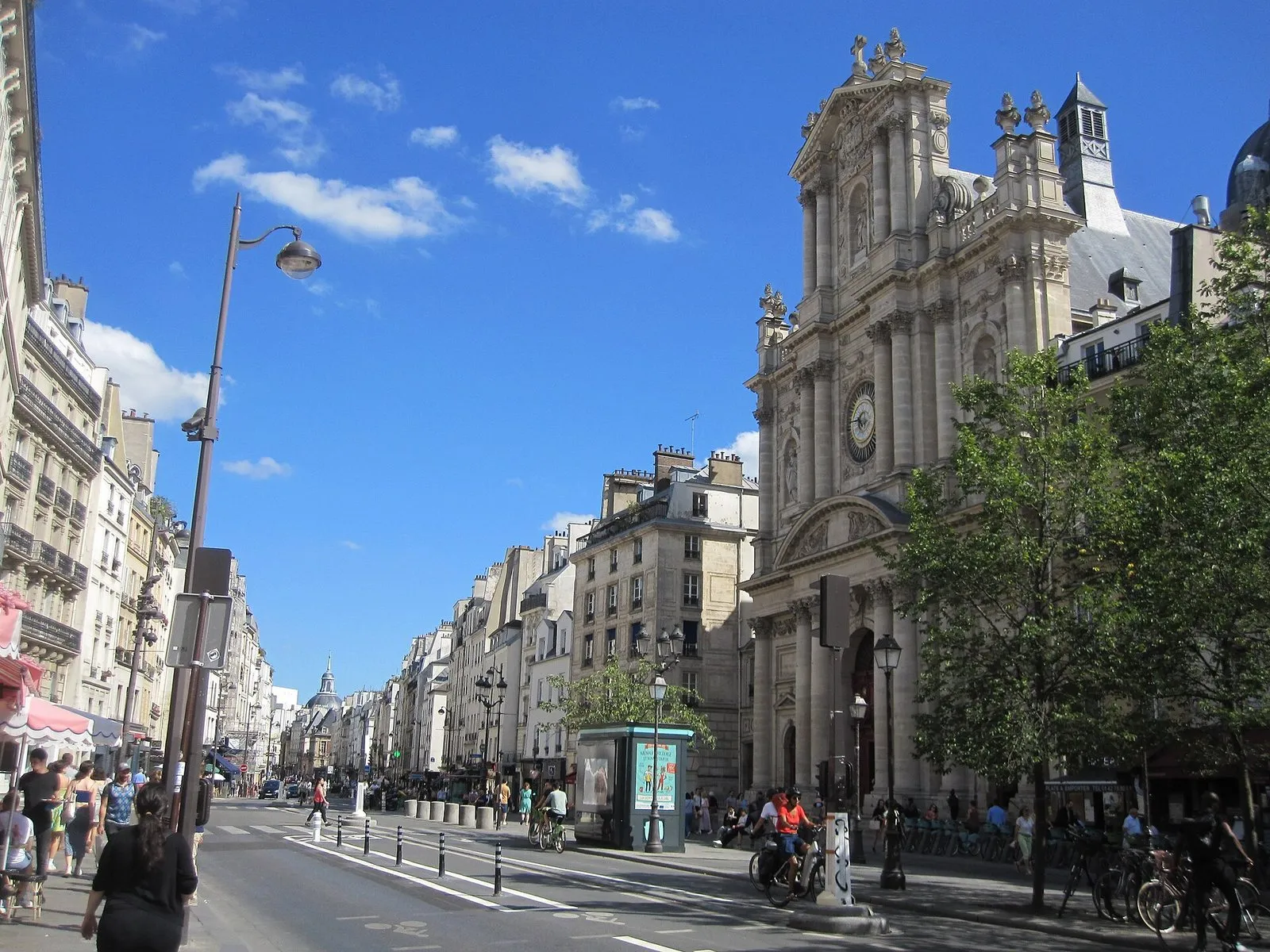
Photo: DiscoA340, CC BY-SA 4.0, via Wikimedia Commons

Hotels near the church
The nearby-hotels block on this page is computed from the church’s coordinates. For the whole sub-district, see hotels around rue Saint-Paul.
History and distinctive features
- The former Jesuit church of Saint-Louis was built between 1627 and 1641 by the architects Étienne Martellange and François Derand, in the baroque style. It was listed as a historic monument in 1887 and took the name Saint-Paul-Saint-Louis in 1803. Source : fr.wikipedia.org
- Works to see include Eugène Delacroix's Christ in the Garden of Olives (Salon of 1827), Germain Pilon's Virgin of Sorrows (1586), and two shell-shaped holy-water stoups given by Victor Hugo at his daughter Léopoldine's wedding in 1843. Source : fr.wikipedia.org
Hotels near the church of Saint-Paul-Saint-Louis
Other hotels
- Hôtel Caron Le Marais ★★★ 1 min walk · 100 m
- Pratic Hôtel ★★ 1 min walk · 100 m
- Hôtel Emile ★★ 1 min walk · 100 m
- Hôtel de JoBo ★★★★ 1 min walk · 100 m
- Grand Hôtel Malher ★★★ 2 min walk · 150 m
- Hôtel Le Temple de Jeanne ★★★ 2 min walk · 150 m
Within 450 m as the crow flies, nearest first. Walking times are estimates: straight-line distance × 1.3, at 80 metres a minute, to the station, not to a specific exit.
Tours and tickets
Some links are affiliate links: if you book through them, we may earn a commission, at no extra cost to you. How we are paid
-
GetYourGuide
Classical concert at Saint-Paul-Saint-Louis church
A concert in the church, listed in the GetYourGuide catalogue on 2 October 2026. It is a concert, not an entry ticket, since the church itself is free; dates and prices were not checked.
See it on GetYourGuide
Frequently asked questions
Is Saint-Paul-Saint-Louis church free to enter?
Yes. Entry is free and no booking is needed. It is a parish church, so visits pause during services and prayer.
When is it open?
Every day from 8 a.m. to 8 p.m., except that individual and group visits are not possible during services, prayer times and all Sunday morning.
What is there to see inside?
A Delacroix painting, Christ in the Garden of Olives, shown at the Salon of 1827; a Virgin of Sorrows by Germain Pilon dated 1586; and two shell stoups offered by Victor Hugo in 1843.
Who built the church?
The architects Étienne Martellange and François Derand, between 1627 and 1641, for the Jesuits. It was then the church of Saint-Louis, and became Saint-Paul-Saint-Louis in 1803.
Which metro station is nearest?
Saint-Paul on line 1, about 78 metres away. Line 7 stations Sully-Morland and Pont Marie are about 350 metres away.
How tall is the dome of Saint-Paul-Saint-Louis?
55 metres, according to Wikipedia; the cross at the top reaches 56 metres.
When can I visit Saint-Paul-Saint-Louis?
Every day from 8 a.m. to 8 p.m., free, but not during services, prayer times or on Sunday morning.
Is the church accessible to wheelchair users?
No: according to paris.fr, it is not accessible to people with reduced mobility.
What time are the services at Saint-Paul-Saint-Louis?
On Sunday at 9.30 a.m., 11 a.m. and 7 p.m.; on weekdays at 7 p.m., with an extra mass at 12.15 p.m. from Thursday to Saturday. Read on the parish website on 5 October 2026.
Who designed Saint-Paul-Saint-Louis?
The Jesuit architects Étienne Martellange and François Derand, between 1627 and 1641. Cardinal Richelieu said the first mass on 9 May 1641.