Our guides
Le Marais history, from marsh to protected district
How Le Marais went from marshland to aristocratic quarter, then to craft district and protected area, told through the dated sites you can still visit. Checked October 2026.
A marsh, then a royal quarter
According to Wikipedia, Le Marais began as a marshland on the right bank of the Seine. Under Henri IV and Louis XIII it became an aristocratic quarter. The sign of this change is the place Royale, begun in 1605 and finished in 1612, now the place des Vosges: 36 pavilions in brick and stone around a square of about 140 metres a side, the oldest in Paris.
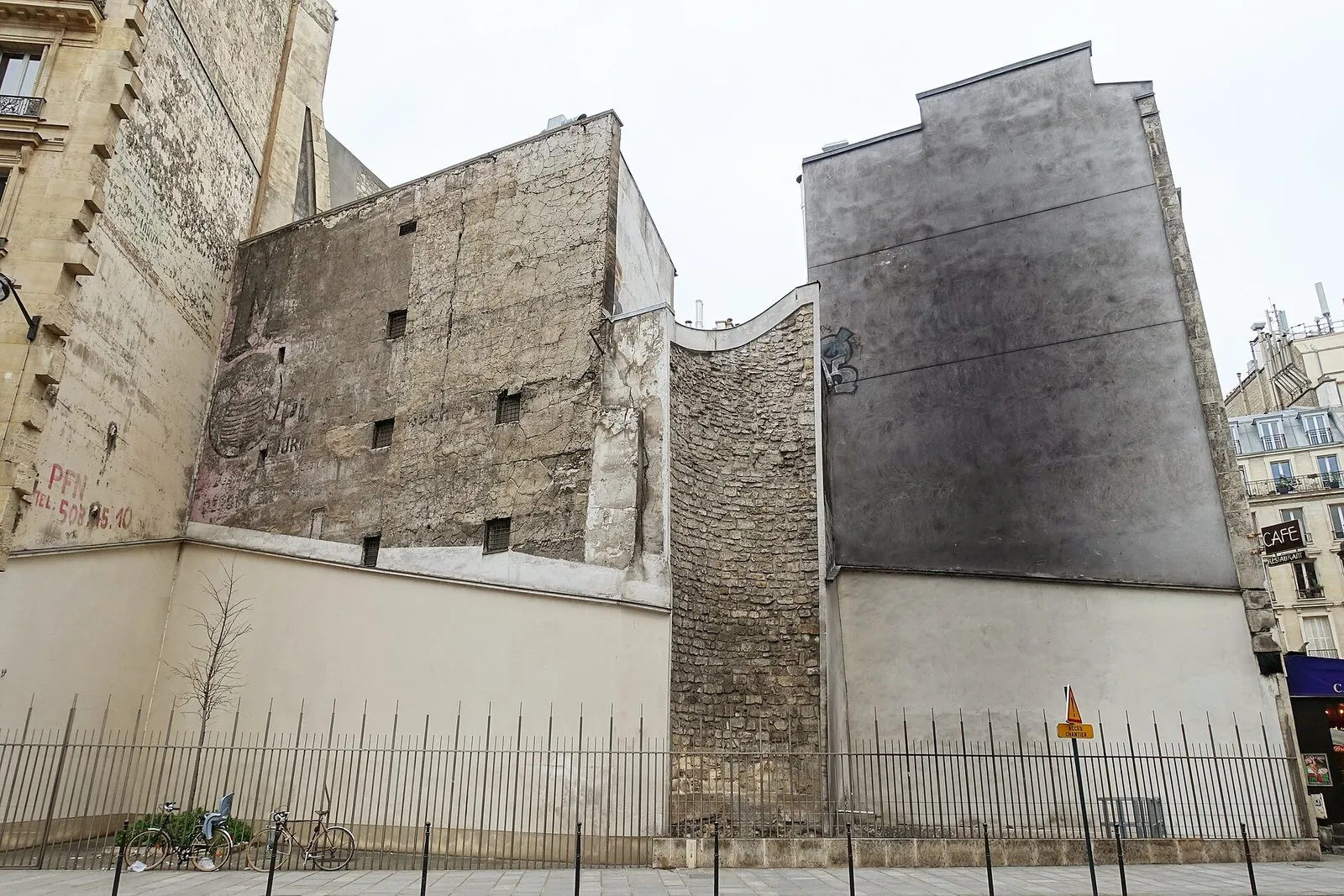
Photo: Guilhem Vellut, CC BY 2.0, via Wikimedia Commons

An earlier royal presence had left its mark already. Charles V set up a royal residence, the hôtel Saint-Pol, from 1360, and rue des Lions-Saint-Paul recalls its menagerie. That ground is now the Village Saint-Paul.
The seventeenth-century mansions and churches
The Jesuits’ church of Saint-Louis, built from 1627 to 1641 by Étienne Martellange and François Derand, still stands under the name of Saint-Paul-Saint-Louis; the Baroque building was listed in 1887. Nearby, the Hôtel de Sully has a passage that crosses its courtyard and garden to reach the place des Vosges. The public can walk it every day, according to the hôtel’s website.
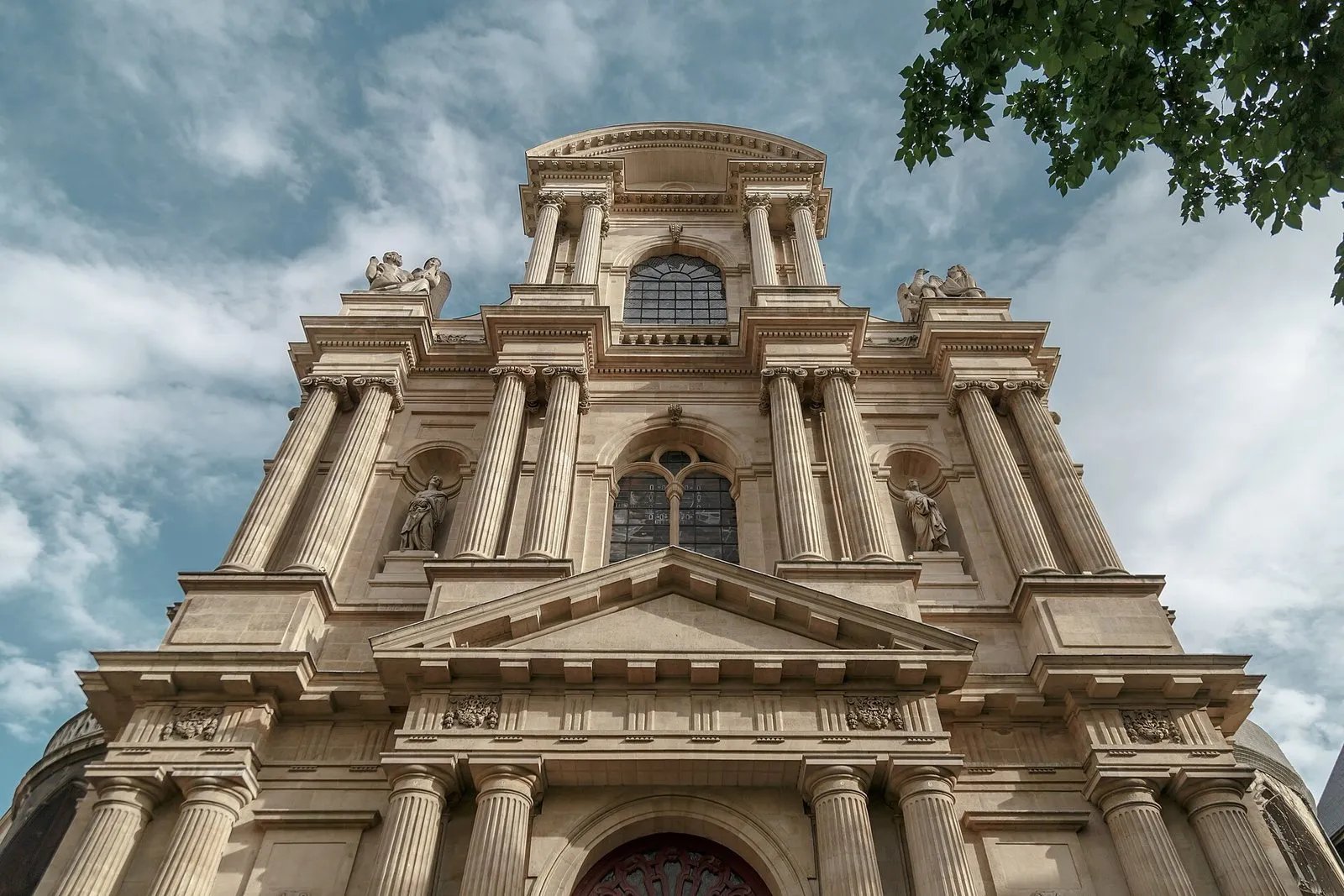
Photo: John Gillespie, CC BY-SA 2.0, via Wikimedia Commons

The Hôtel de Saint-Aignan, home to the mahJ, was built from 1644 to 1650 by Pierre Le Muet. It was heightened and divided after the Revolution, housed workshops of Jewish immigrants before the City of Paris bought it in 1962.
A working and immigrant district
The district then became a working-class and artisan quarter, according to Wikipedia. Between 1881 and 1914, according to Wikipedia, some 20,000 Jews from Eastern Europe settled around rue des Rosiers, where two orthodox synagogues, at nos. 17 and 25, and the Finkelsztajn bakery, at no. 27 since 1865, mark the period. See the Jewish quarter and rue des Rosiers.
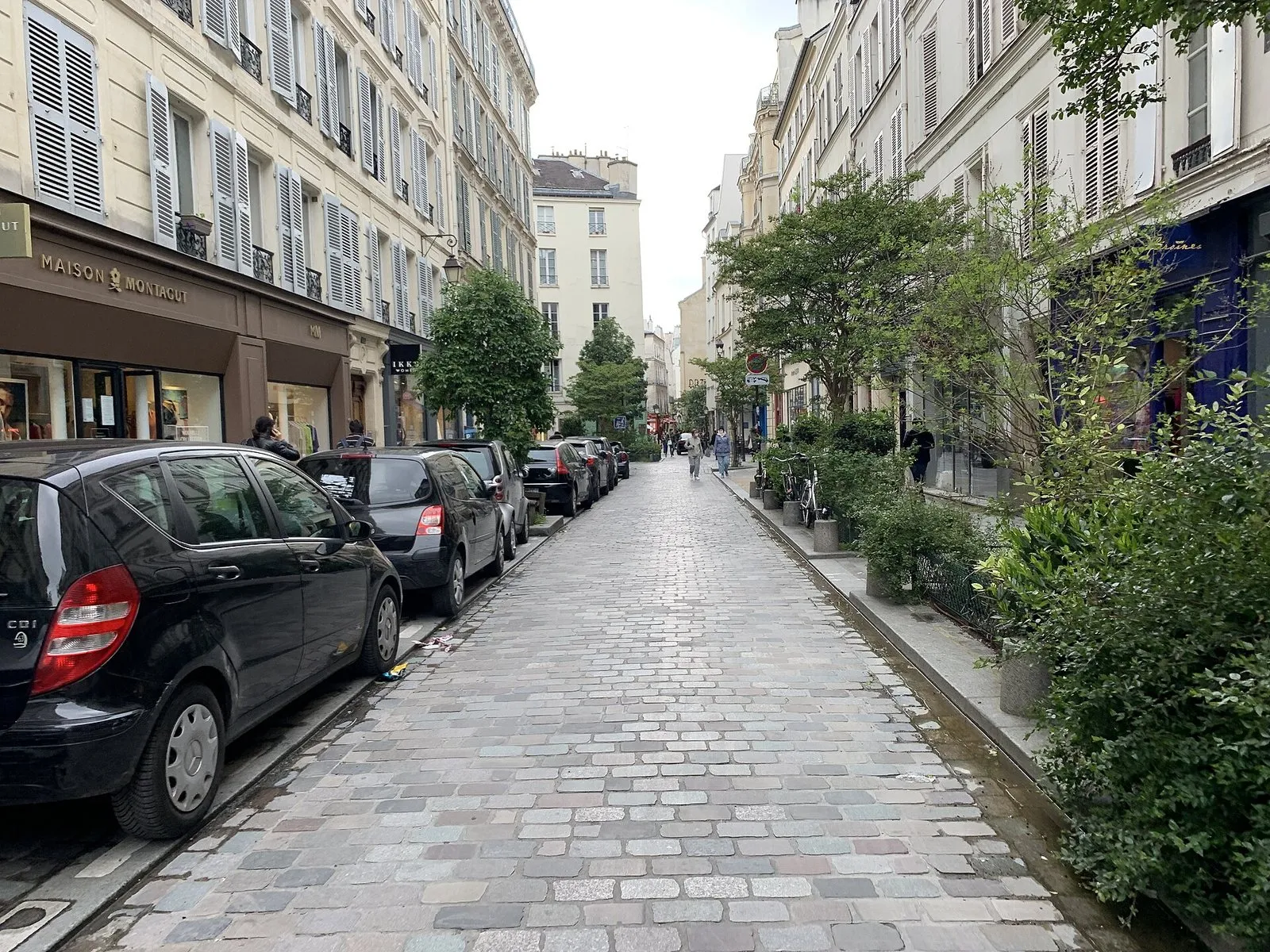
Photo: Chabe01, CC BY-SA 4.0, via Wikimedia Commons

Rebuilding and protection
The Hôtel de Ville burned on 23 and 24 May 1871, set alight by the Communards, and was rebuilt in neo-Renaissance style between 1874 and 1882. The Malraux law dates from 1962; in 1964 the Marais became the first protected area (secteur sauvegardé) in France. Within it, in the early 1980s, the block that became the Village Saint-Paul was cleared. Our page on the Hôtel de Ville covers the building.
Before the royal quarter
The quarter’s name is literal. According to Wikipedia, the Marais was marshland on the right bank, used as pasture from the ninth century, drained gradually by channels and farmed from the early twelfth century. Much of the land was held by religious institutions: the Temple enclosure, the abbey of Saint-Martin-des-Champs and various convents. Philippe Auguste’s city wall, built between 1190 and 1209, enclosed a territory that was still partly empty.
The Tournelles and the place Royale
The Hôtel des Tournelles remained a royal residence until the death of Henri II in 1559. His widow obtained its demolition, and the ground stayed vacant for decades. The place Royale, today the place des Vosges, opened that ground up and began the prosperous period of the quarter, which drew the nobility to build their mansions around it. The Jesuits placed their church in the same elite district.
The departure of the aristocracy
From the end of the seventeenth century, the high nobility had increasingly settled west, in the Faubourg Saint-Germain, and the Revolution amplified the departures. Craftsmen and workshops took over former mansions, which explains the working-class and artisan character of the nineteenth-century quarter. Baron Haussmann’s transformations touched the Marais only marginally, which is one reason so much of the seventeenth-century fabric survives.
Saving the quarter
By the 1960s the quarter was in a poor state. André Malraux championed its rescue, and in 1964 the Marais became the first protected area in France, the secteur sauvegardé. The 1965 rules covered 126 hectares, and the plan was approved in 1996. The result, as Wikipedia puts it, is a district that is now one of the most sought-after and most expensive of Paris.
Reading the periods on a walk
| Period | Where to see it | Our page |
|---|---|---|
| Royal quarter, 1605–1612 | Place des Vosges | Place des Vosges |
| Seventeenth-century mansion | Hôtel de Sully, Carnavalet | Hôtel de Sully, Carnavalet |
| Jesuit Baroque, 1627–1641 | Saint-Paul–Saint-Louis | Church |
| Immigrant quarter, 1881–1914 | Rue des Rosiers | Rue des Rosiers |
| Neo-Renaissance, 1874–1882 | Hôtel de Ville | Hôtel de Ville |
| Safeguarded quarter, 1964 | Village Saint-Paul | Village Saint-Paul |
The walking tour covers all six in 3.8 km, and the guide to Le Marais places them among the eight sub-quarters.
Metro for the historic sites
The sites of the walk through time are served by three groups of stations.
- Hôtel de la Place des Vosges, 102 m from the place des Vosges, lists Bastille (lines 1 and 5 and 8) at 350 m, 5 min on foot; Saint-Paul (line 1) at 400 m, 5 min on foot.
- Grand Hôtel Malher, 199 m from the rue des Rosiers, lists Saint-Paul (line 1) at 50 m, 1 min on foot; Pont Marie (line 7) at 500 m, 6 min on foot.
- Hôtel Andrea, 256 m from the Hôtel de Ville, lists Hôtel de Ville (lines 1 and 11) at 150 m, 2 min on foot; Châtelet (lines 1 and 4 and 7 and 11 and 14) at 250 m, 3 min on foot.
A square under four names
According to Wikipedia, Henri IV launched the project in 1604 on the ground left by the demolished Hôtel des Tournelles. It was built from 1605 to 1612 by Jacques Androuet du Cerceau and Claude Chastillon, and inaugurated with a carrousel celebrating the engagement of Louis XIII to Anne of Austria. The façades are red brick with white stone trim and steep blue-slate roofs, over ground-floor arcades.
The square has had four names: place Royale, then place des Fédérés in 1792, place de l’Indivisibilité in 1793 and, from 1800, place des Vosges, after the first department to pay the revolutionary tax. It has been protected as a historic monument since 1954. Victor Hugo’s apartment at no. 6 is among the best-known residences.
Where to stay in the old quarter
To sleep beside the oldest square in Paris, compare hotels near the place des Vosges.
History and distinctive features
- The place des Vosges, the former place Royale, was built between 1605 and 1612. It is the oldest square in Paris, about 140 metres on each side, with 36 brick-and-stone pavilions. Source : fr.wikipedia.org
- The church now called Saint-Paul-Saint-Louis was built from 1627 to 1641 as the Jesuits' church of Saint-Louis, in the Baroque style; it was listed as a historic monument in 1887 and took its present name in 1803. Source : fr.wikipedia.org
- The Hôtel de Ville was rebuilt from 1874 to 1882 in the neo-Renaissance style after the fire set by the Communards on 23 and 24 May 1871. The square in front of it, the place de l'Hôtel-de-Ville, was formerly the place de Grève. Source : fr.wikipedia.org
Frequently asked questions
Why is the district called Le Marais?
The word means marsh. According to Wikipedia, the area was a marshland on the right bank before it was built up. Our sources give no more detail, so we do not trace the name further.
When did Le Marais become an aristocratic quarter?
Under Henri IV and Louis XIII, when it became an aristocratic quarter and the place Royale, now the place des Vosges, was built from 1605 to 1612.
What protects the district today?
The Malraux law dates from 1962, and in 1964 the Marais became the first protected area (secteur sauvegardé) in France. The Village Saint-Paul, in the 4th, was cleared and rebuilt within it in the early 1980s.
Which sites give the clearest picture of the past?
The place des Vosges for the royal period, the Saint-Paul-Saint-Louis church for the seventeenth century, rue des Rosiers for the Jewish quarter, and the Hôtel de Ville for the nineteenth-century rebuilding.
Is there a museum of the district's history?
The Carnavalet museum, devoted to the history of Paris, is open Tuesday to Sunday from 10 a.m. to 6 p.m. and closed on Mondays, according to its website.
What was on the site of the place des Vosges before 1605?
The Hôtel des Tournelles, a royal residence until Henri II’s death in 1559; his widow obtained its demolition, and the ground stayed empty for decades, according to Wikipedia.
When did the aristocracy leave Le Marais?
From the end of the seventeenth century, the high nobility settled more and more in the Faubourg Saint-Germain, and the Revolution amplified the departures, according to Wikipedia.
How big is the protected area of Le Marais?
The 1965 regulations of the first safeguarded sector in France covered 126 hectares, and the plan was approved in 1996, according to Wikipedia.
Which metro station is nearest to the oldest square in Paris?
Chemin Vert, on line 8, about 350 m on foot from the Cour des Vosges hotel, 116 m from the square, and Saint-Paul, on line 1, at 400 m, according to the hotel’s page.
Why is it called the place des Vosges?
Since 1800, after the first department to pay the revolutionary tax, according to Wikipedia. It was first the place Royale, then the place des Fédérés in 1792 and the place de l’Indivisibilité in 1793.