Archives
Museum of Jewish Art and History, Paris (mahJ)
The mahJ in the Hôtel de Saint-Aignan — 2026 hours, ticket prices, the free first Saturday, current exhibitions, the closure planned for 2028 and nearby hotels. Checked October 2026.
A museum in a seventeenth-century mansion
The mahJ is at 71 rue du Temple, in the 3rd arrondissement, in the Hôtel de Saint-Aignan, a seventeenth-century mansion reached through its courtyard. It tells the history and cultures of the Jews of Europe and the Mediterranean from Antiquity to the present day. It opened in 1998 and follows the small Musée d’Art juif de Paris, founded in 1948.
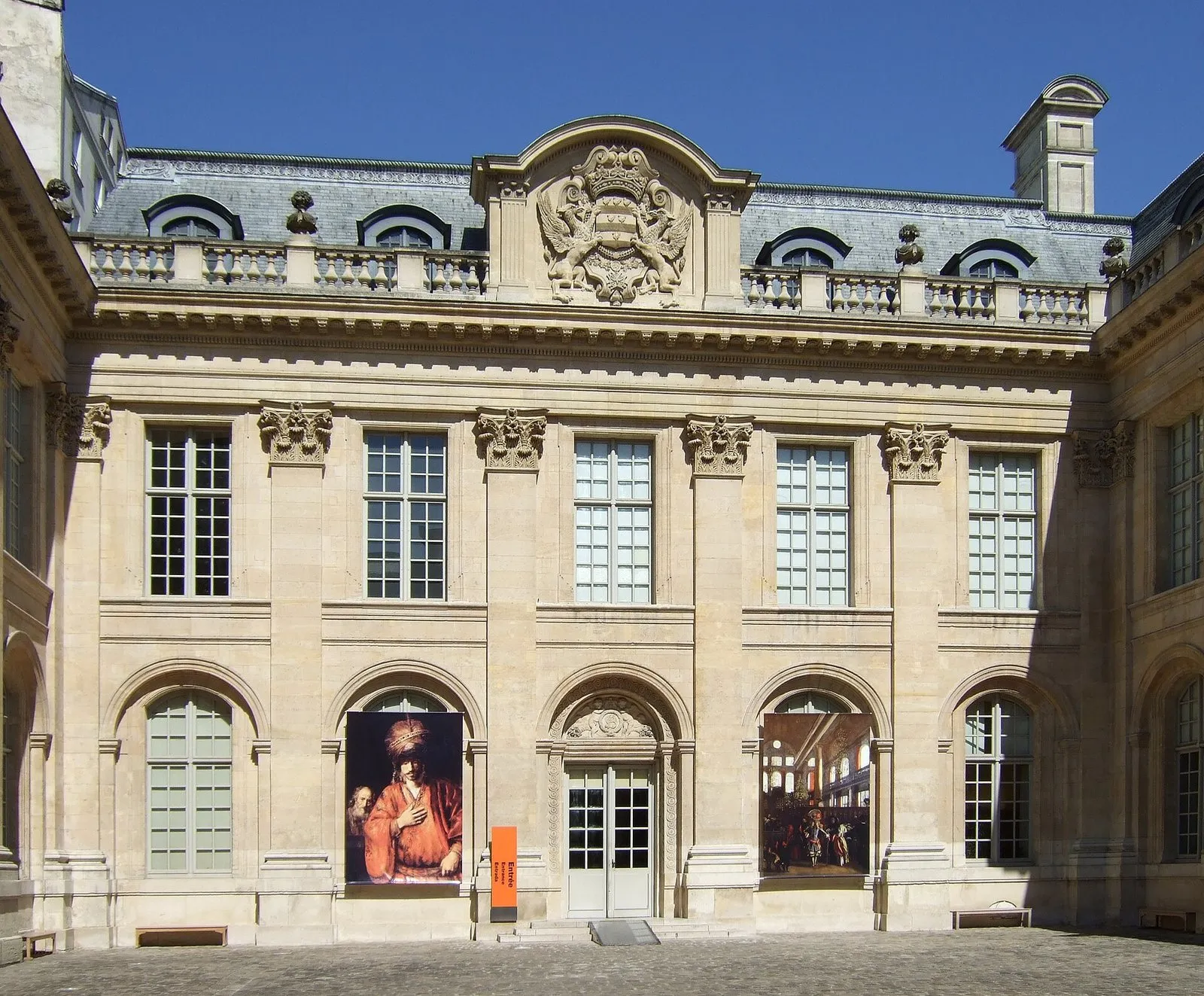
Photo: Ecelan, CC BY-SA 4.0, via Wikimedia Commons

What to see
The collections include the Isaac Strauss collection, offered in 1890 to the Cluny museum, and works by painters of the École de Paris: Chagall, Soutine, Modigliani, Lipchitz and Chana Orloff, among others. The Dreyfus fonds, which holds more than 3,000 items today, is a collection in its own right. In the courtyard, according to Wikipedia, a statue by Tim shows Dreyfus holding his broken sword.
In autumn 2026, the full-price ticket includes an exhibition of 120 ink drawings by Chaïm Kaliski on the Occupation in Brussels, shown until 13 December. A Chagall hanging, “Jour de fête” (1914), runs until 1 November. A free guided visit, “Shabbat est une fête”, takes place on the first Saturday of the month.
Hours and tickets in 2026
The opening hours widen from 15 October 2026: a late opening on Wednesday until 9 p.m., and weekends until 7 p.m., until 14 March 2027. Admission is free on the first Saturday of the month from October to June. The museum recommends buying online.
Works planned for 2028
The 22-million-euro extension project foresees closure in early 2028 and reopening in spring 2030, after two years of works. The permanent route grows from 907 to 1,226 square metres. The museum stays open throughout 2026 and 2027. Some press reports gave late 2027; we follow the museum’s own wording.
In the neighbourhood
The museum belongs to the Jewish quarter described on our Jewish quarter page, about 500 m as the crow flies from the middle of the rue des Rosiers. For a memorial of the Shoah, see the Shoah Memorial. To place the mansion in the district’s story, read the history of Le Marais.
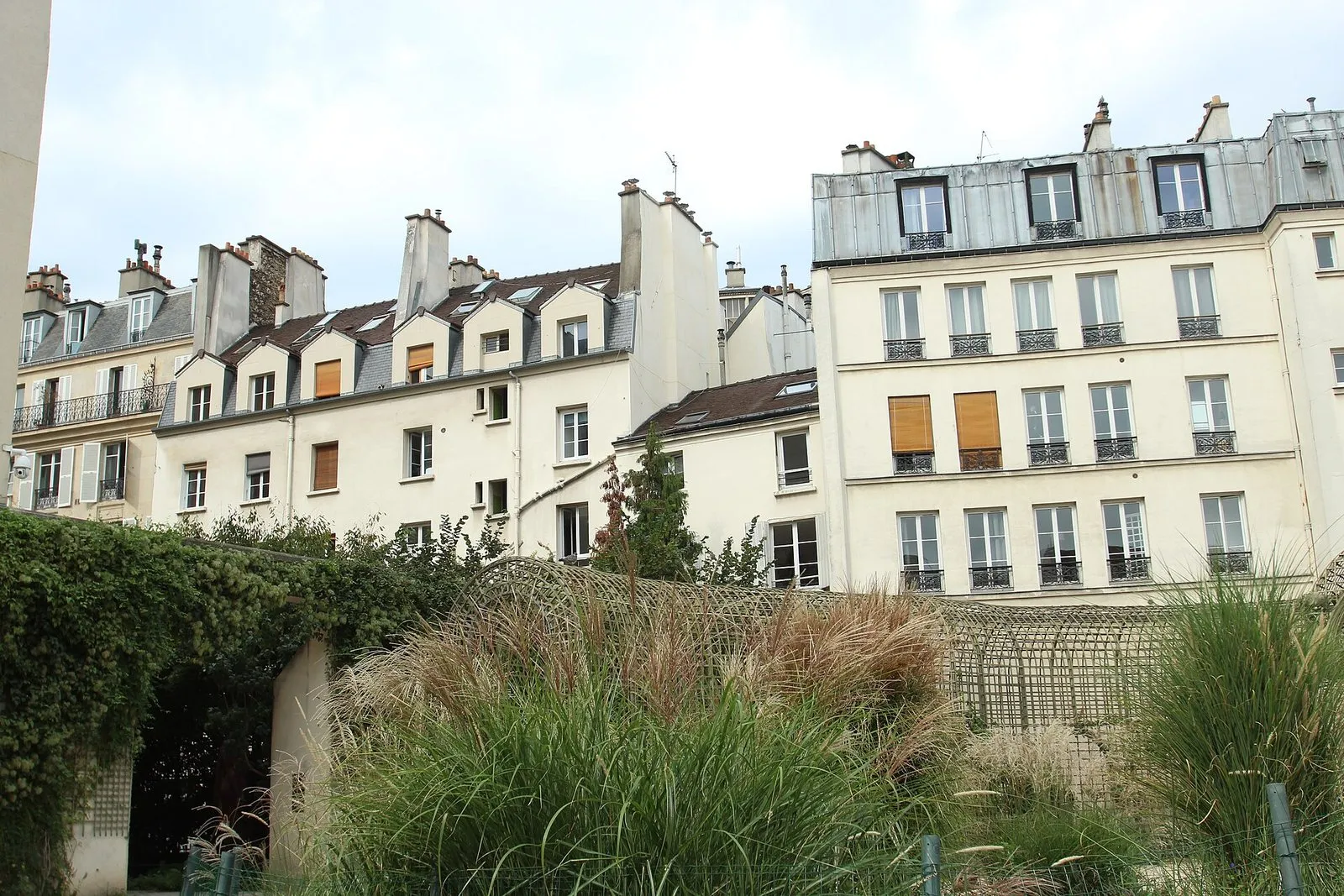
Photo: Lionel Allorge, CC BY-SA 3.0, via Wikimedia Commons

A short history of the building
The Hôtel de Saint-Aignan was built from 1644 to 1650 by the architect Pierre Le Muet for Claude de Mesmes, comte d’Avaux. The restoration brought back the coat of arms of a later owner, Paul de Beauvillier, duke of Saint-Aignan. After the Revolution the house was heightened and divided, and it sheltered the workshops of Jewish immigrants, hatmakers, cap-makers, furriers and tailors, until the City of Paris bought it in 1962. It was listed as a historic monument in 1963, and, according to Wikipedia, a first restoration campaign began in 1978 and a second in 1991. The museum opened in November 1998.
How the permanent collection is laid out
The route follows history and geography at once. According to Wikipedia, it starts with funeral stelae from thirteenth-century Paris, described as the largest archaeological group found on French soil. It continues with synagogue furnishings and marriage contracts (ketubbot) from Italy, a room of Hanukkah lamps from France, Germany, Italy, Poland, Yemen, Tunisia and Israel, then the Ashkenazi and Sephardic worlds, with textiles, Torah arks and models of synagogues from Eastern Europe. The nineteenth century brings the emancipation of the Jews of France and the Dreyfus fonds, and the twentieth the painters of the École de Paris.
What not to miss
- The Dreyfus fonds. The museum describes it as a collection in its own right since 1997, after a gift from the captain’s grandchildren; it holds the registers of the guards of Devil’s Island and a letter from Dreyfus to his wife dated 31 January 1895.
- The Boltanski work in the small courtyard. Les habitants de l’hôtel de Saint-Aignan en 1939 (1998) lists the names, birthplaces and trades of the building’s residents that year.
- The Isaac Strauss collection. The composer’s collection was bought by the baroness Nathaniel de Rothschild and given in 1890 to the Cluny museum, and it is one of the collections the museum names in its history.
- The École de Paris. Chagall, Soutine, Modigliani, Lipchitz and Chana Orloff are named by the museum; Wikipedia adds Kikoïne to the same section.
Services on site
According to Wikipedia, the museum has a 190-seat auditorium, a research library of about 30,000 documents open by appointment, and a bookshop with more than 6,000 titles. The library and the offices are planned to move to the former school of the clos des Blancs-Manteaux when the extension project begins, according to the museum.
Choosing your moment
The mahJ is closed on Mondays. Until 14 October 2026 it opens at 11 a.m. on weekdays and at 10 a.m. at weekends; from 15 October 2026 to 14 March 2027 it adds a Wednesday late opening until 9 p.m. and keeps weekends open until 7 p.m., which suits an evening visit before dinner in the Marais. The first Saturday of the month, October to June, is free, with a free guided visit; expect more visitors then, and the museum recommends buying a ticket online on other days. Last admission is 45 minutes before closing, and bags are checked at the entrance.
Getting there
Rambuteau (line 11) is the nearest station, about 158 metres away in a straight line, which the museum puts at a two-minute walk. Hôtel de Ville (lines 1 and 11) is about 487 metres away, Arts et Métiers (lines 3 and 11) about 492 metres and Étienne Marcel (line 4) about 552 metres.
Combining the visit with a walk
Distances are straight-line, computed from the coordinates in our data; walking times follow our method (distance × 1.3, at 80 m a minute).
- Archives nationales and the Hôtel de Soubise: 164 metres, about 3 minutes.
- Museum of Hunting and Nature: 228 metres, about 4 minutes.
- Centre Pompidou: 336 metres, about 6 minutes.
- BHV Marais: 452 metres, about 8 minutes.
- Rue des Rosiers: 508 metres, about 9 minutes.
A morning at the mahJ and an afternoon on the rue des Rosiers is the natural sequence.
Hotels nearby
The hotels below are the closest to the museum, sorted by distance from its address. For the area, see hotels in the 3rd arrondissement.
History and distinctive features
- The Hôtel de Saint-Aignan was built from 1644 to 1650 by the architect Pierre Le Muet for Claude de Mesmes, comte d'Avaux. After the Revolution it was heightened and divided, and it housed workshops of Jewish immigrants before the City of Paris acquired it in 1962. Source : mahj.org
- The museum was launched in 1985 and opened in 1998. It succeeds the Musée d'Art juif de Paris, a small association museum founded in 1948 on rue des Saules in the 18th arrondissement. Source : mahj.org
- The collections include the Alfred Dreyfus fonds, which became a collection in its own right in 1997 through a gift from the captain's grandchildren, with the registers of the guards of Devil's Island. Source : mahj.org
- In a small courtyard, Christian Boltanski's work "Les habitants de l'hôtel de Saint-Aignan en 1939" (1998) lists the names, birthplaces and trades of the building's residents in 1939. Thirteen of its Jewish residents were murdered in the Nazi camps. Source : mahj.org
Hotels near the Museum of Jewish Art and History
Other hotels
- Hôtel Beaubourg ★★★ 3 min walk · 250 m
- Hôtel du Vieux Marais ★★★ 3 min walk · 250 m
- 1er Étage Marais Not classified by Atout France 4 min walk · 350 m
- Hôtel de la Bretonnerie ★★★ 4 min walk · 350 m
- Experimental Marais ★★★★★ 5 min walk · 400 m
- Hôtel Jules & Jim ★★★★ 5 min walk · 400 m
Within 450 m as the crow flies, nearest first. Walking times are estimates: straight-line distance × 1.3, at 80 metres a minute, to the station, not to a specific exit.
Frequently asked questions
How much is a ticket to the mahJ?
€13 at the full rate, €9 at the reduced rate, free under 18, with €0.50 added per ticket bought online. Prices read on the museum's website on 4 October 2026.
When is the mahJ free?
On the first Saturday of the month from October to June, according to the museum; the next dates are 7 November and 5 December 2026, 2 January and 6 February 2027. There is no free first Sunday.
Is the museum open on Sunday?
Yes, from 10 a.m. to 6 p.m., and until 7 p.m. between 15 October 2026 and 14 March 2027. It is closed on Mondays.
What is on in autumn 2026?
Chaïm Kaliski, “Jim d'Etterbeek”, until 13 December 2026, and a Chagall hanging, “Jour de fête”, until 1 November 2026. The Kaliski exhibition is included in the full-price ticket.
Will the museum close for works?
According to the museum, closure is planned for early 2028 with reopening in spring 2030. It is open normally in 2026 and 2027.
How long should I allow for the mahJ?
The museum does not publish a visit time. The permanent route covers 907 square metres today, and the full-price ticket also includes the current exhibition, so allow time for both.
Does the mahJ have an audioguide, and can I use its library?
An audioguide in French, English and Spanish is included in the full-price ticket. The research library is open by appointment, according to Wikipedia.
What is the Hôtel de Saint-Aignan?
A mansion built from 1644 to 1650 by Pierre Le Muet for the comte d'Avaux, listed as a historic monument in 1963 according to Wikipedia, which has housed the museum since November 1998.