Archives
Museum of Hunting and Nature in Paris
The Museum of Hunting and Nature at 62 rue des Archives — opening hours, 2026 prices, first-Sunday free entry, the Sabatté show from 15 October and hotels nearby. Checked October 2026.
Two mansions, one collector’s house
The Museum of Hunting and Nature, a private museum run by the Fondation François Sommer and labelled a « Musée de France », explores the relationship between humans and animals from Antiquity to today. It occupies two neighbouring mansions on rue des Archives, the seventeenth-century Hôtel de Guénégaud and the eighteenth-century Hôtel de Mongelas. Paintings, weapons, tapestries, decorative objects, taxidermy and contemporary art are mixed together in the manner of an art lover’s home. Mansart’s Hôtel de Guénégaud, built in 1652-1653, has been a listed monument since 1962, and the museum reopened there in July 2021 after its enlargement. The foundation also shows part of its collections on the second floor of the Château de Chambord, since 1971.
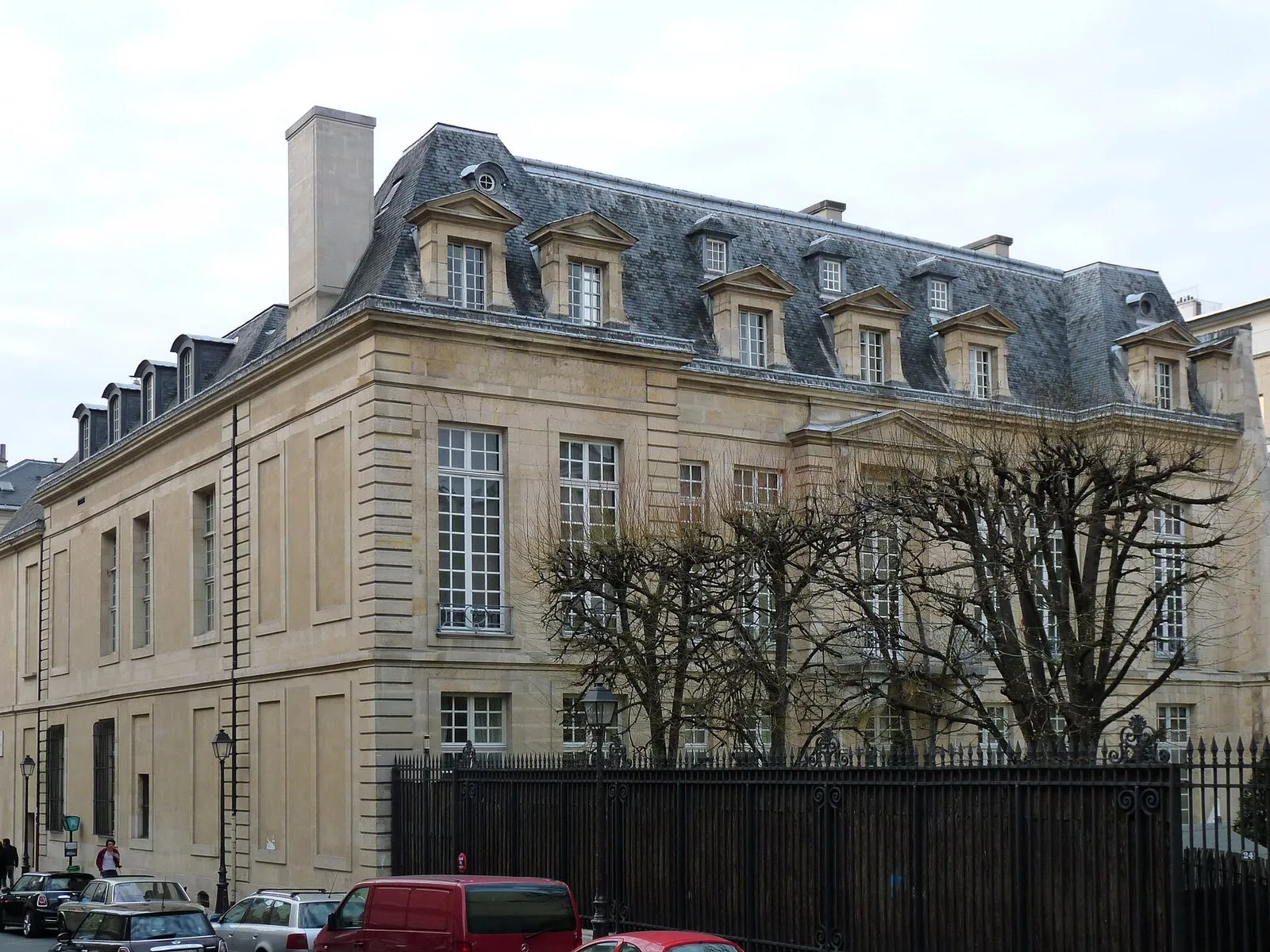
Photo: Ralf.treinen, CC BY-SA 3.0, via Wikimedia Commons

Exhibitions in 2026
- From 15 October. « Ce qui reste » by Lionel Sabatté, until 21 February 2027. The artist was nominated for the 2025 Marcel Duchamp prize. A monumental bronze, « Mort fertile », is announced for the courtyard.
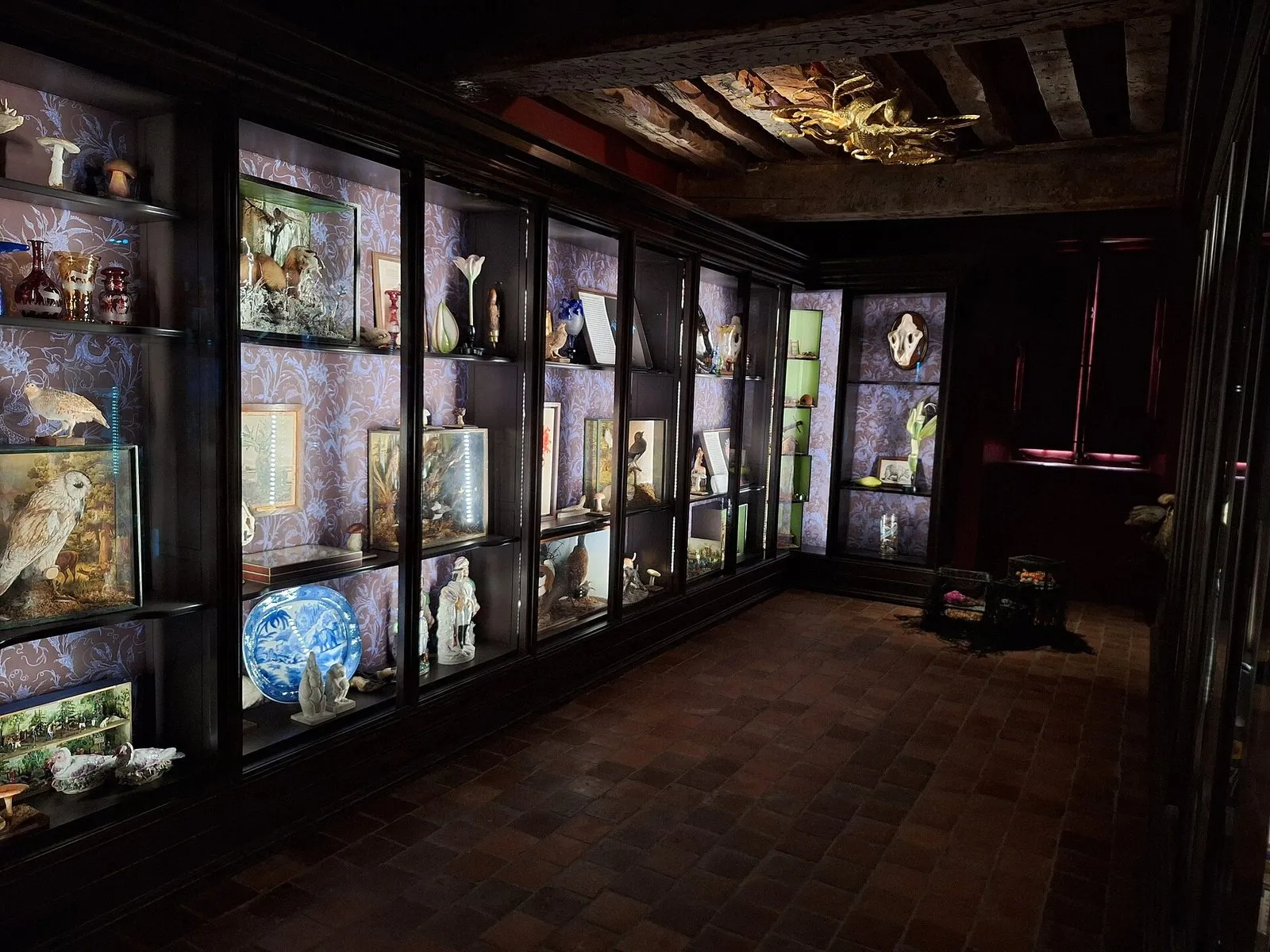
Photo: Heidi Meudt, CC BY 4.0, via Wikimedia Commons

A foundation, a minister and two mansions
The museum was founded by François Sommer (1904-1973) and his wife Jacqueline (1913-1993), industrialists from the Ardennes. Their foundation, now the Fondation François Sommer, was recognised as being of public utility by decree on 30 November 1966. André Malraux, then minister of Cultural Affairs, inaugurated the museum on 21 February 1967 in the Hôtel de Guénégaud. In 2007 the museum extended into the neighbouring Hôtel de Mongelas; it closed on 1 July 2019 for an enlargement and reopened in July 2021 with an extra floor of six attic rooms, 250 square metres more.
What not to miss
According to Wikipedia, the collections count about 6,000 objects. Paintings by Lucas Cranach the Elder, Peter Paul Rubens, Jean Siméon Chardin, Jean-Baptiste Oudry and François Desportes hang beside works by contemporary artists, among them Jan Fabre, Jean-Michel Othoniel and Mark Dion.
- A mixed route. The permanent display brings together paintings, drawings, sculptures, carpets, tapestries, goldsmiths’ work, ceramics, weapons, armour, furniture, photographs, videos and installations, with taxidermied animals built into the display.
- Themed rooms. The museum names a Cabinet of Dogs and a room devoted to birds.
- The ground floor. The entrance hall is spacious and the bookshop is open to everyone without a ticket, according to the museum.
Choosing your moment
The museum is open Tuesday to Sunday from 11 a.m. to 6 p.m., with a Wednesday late opening from 6 to 9.30 p.m. except in July and August. It closes at 5 p.m. on 24 and 31 December and does not take cash. The full price is €13 during a temporary exhibition, which applies from 15 October 2026 with Lionel Sabatté, and €11 between two exhibitions; the reduced rates are €11 and €9. The museum programmes two to three temporary exhibitions a year, plus visits, workshops and lectures. The museum is accessible to people with reduced mobility.
The Hôtel de Guénégaud in detail
Mansart built the house in 1652-1653 for Jean-François de Guénégaud. According to Wikipedia, two classical pavilions flank the entrance and the main building stands between courtyard and garden. A stone staircase with a double flight fills the south wing. The City of Paris bought the house in 1962 and leased it in 1964 to the foundation that created the museum. It was listed as a historic monument in 1962.
The Hôtel de Mongelas next door was acquired in 2002 and joined to the museum in 2007, according to Wikipedia.
What the foundation says it is for
The Fondation François Sommer states that it works to build a peaceful dialogue among all users of nature, hunters and non-hunters, and to promote a humanist ecology based on the sustainable use of natural resources. The museum is the foundation’s direct realisation.
Visiting with children and with reduced mobility
The museum states that it is accessible to people with reduced mobility. Strollers are not admitted to the rooms. For families, it announces visits and workshops under the title “L’art et le vivant à hauteur d’enfant”, running from 10 October 2026 to 20 February 2027, and it offers reduced rates and free entry for some categories. The website does not mention an audioguide, a café, a cloakroom or guided tours, so we give none. Group visits are booked in advance.
The autumn exhibition in detail
“Ce qui reste” by Lionel Sabatté runs from 15 October 2026 to 21 February 2027. It includes a monumental bronze, “Mort fertile”, measuring 170 by 250 by 80 centimetres, which stands in the courtyard. The museum also publishes the review Billebaude and a podcast series, “Rencontres sauvages”, which can be followed without visiting.
Getting there
Rambuteau (line 11) is the nearest station, about 376 metres away in a straight line. Arts et Métiers (lines 3 and 11) is about 447 metres away, Temple (line 3) about 580 metres and Hôtel de Ville (lines 1 and 11) about 682 metres. The address is 62 rue des Archives, in the 3rd arrondissement.
Combining the visit with a walk
Straight-line distances from the museum are computed from our coordinates; the walking times come from the same 1.3 detour factor and 80-metre-a-minute pace.
- Archives nationales and the Hôtel de Soubise: 197 metres, about 4 minutes.
- Museum of Jewish Art and History: 228 metres, about 4 minutes.
- Picasso Museum: 355 metres, about 6 minutes.
- Musée Cognacq-Jay: 422 metres, about 7 minutes.
- Rue des Rosiers: 486 metres, about 8 minutes.
- Musée des Arts et Métiers: 523 metres, about 9 minutes.
Where to stay near the museum
Six hotels in our database lie within 290 m. The nearest are Experimental Marais at 178 m, Boudoir des Muses at 239 m and Hôtel Jules & Jim at 245 m. For the rest of the district, see our guide to Le Marais and our hotels in the 3rd arrondissement.
History and distinctive features
- The museum was founded by François Sommer (1904-1973) and his wife Jacqueline (1913-1993), industrialists from the Ardennes; their foundation was declared of public utility by decree on 30 November 1966. Source : fr.wikipedia.org
- It was opened on 21 February 1967 by André Malraux, then minister of cultural affairs, in the Hôtel de Guénégaud entrusted to the foundation. Source : chassenature.org
- The Hôtel de Guénégaud was raised in 1652-1653 by François Mansart and has been a listed monument since 1962. Source : fr.wikipedia.org
- In 2007 the museum extended into the neighbouring eighteenth-century Hôtel de Mongelas; closed in July 2019 for enlargement, it reopened in July 2021 with an extra floor, six more rooms and 250 m² of space. Source : fr.wikipedia.org
Hotels near the Museum of Hunting and Nature
Other hotels
- Experimental Marais ★★★★★ 3 min walk · 250 m
- Boudoir des Muses ★★★★ 4 min walk · 300 m
- Hôtel Jules & Jim ★★★★ 4 min walk · 300 m
- Hôtel du Petit Moulin ★★★★ 4 min walk · 350 m
- Hôtel Jacques de Molay ★★★ 4 min walk · 350 m
- La Chambre du Marais ★★★★ 4 min walk · 350 m
Within 450 m as the crow flies, nearest first. Walking times are estimates: straight-line distance × 1.3, at 80 metres a minute, to the station, not to a specific exit.
Frequently asked questions
How much does the Museum of Hunting and Nature cost?
Full price is €13 during a temporary exhibition, from 15 October 2026, and €11 between exhibitions; the reduced rate is €11 or €9. The scale has applied since 1 January 2025.
When is entry free?
On the first Sunday of every month for everyone, and all year for under-18s, students and teachers of art or art history, and disabled visitors with their companion, with proof.
Which exhibition does the museum show this autumn?
« Ce qui reste » by Lionel Sabatté, from 15 October 2026 to 21 February 2027: paintings, drawings, sculptures and tapestries, mostly new, through the whole museum and the courtyard.
Can I pay in cash?
No. Cash payments are refused.
Does the Museum of Hunting and Nature take cash?
No: according to the museum, cash payment is refused, so bring a card.
Is the museum open in the evening?
Yes on Wednesday, from 6 p.m. to 9.30 p.m., except in July and August. On the other days it closes at 6 p.m.
Who founded the Museum of Hunting and Nature?
François Sommer and his wife Jacqueline, industrialists from the Ardennes. André Malraux inaugurated the museum on 21 February 1967, according to the museum.
Is the Museum of Hunting and Nature accessible to wheelchair users?
The museum states that it is accessible to people with reduced mobility. Strollers are not admitted to the rooms.
How much is the exhibition ticket in autumn 2026?
€13 at full price during a temporary exhibition, which applies from 15 October 2026 with Lionel Sabatté, and €11 between two exhibitions. Reduced rates are €11 and €9.